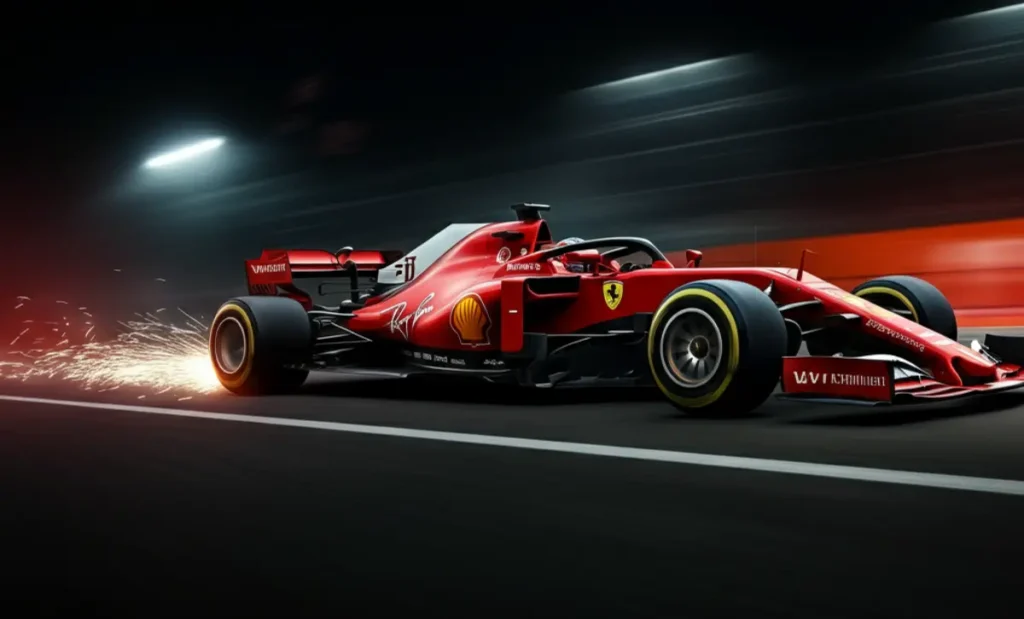
Ollie Bearman is a name on everyone’s radar in the UK motorsport scene. At just 20, this young British driver made a big impression with his entry into Formula 1. Racing for Scuderia Ferrari, Bearman represents the new wave of UK talent ready to make its mark on the sport.
Quick Facts: Ollie Bearman
- Age: 20
- Nationality: British
- Team Affiliation: Scuderia Ferrari Driver Academy, Haas F1 Team Reserve Driver
- Key Achievement: Points finish in his first Formula 1 Grand Prix
- Background: F2 champion contender
An Impressive Formula 1 Debut
Very few rookies get a chance to race for Ferrari. When Carlos Sainz became ill before the Saudi Arabian Grand Prix, Ollie Bearman got the call. Bearman stepped up, showing both confidence and poise in a high-pressure moment. He progressed through qualifying and came close to reaching the final shootout. On race day, Bearman impressed again, scoring his first Formula 1 points. His achievement drew quick praise from across the paddock.
For more about Bearman’s debut, read the official Formula 1 race report.
Building His Future With Ferrari
Bearman’s links to Ferrari are strong. He is a member of the prestigious Scuderia Ferrari Driver Academy. He also serves as reserve driver for both Ferrari and Haas. With his eye-catching F1 debut, Bearman has boosted his chances for a regular seat. Several driver contracts expire soon, and many believe Bearman could soon land a full-time race seat.
Fans and team insiders agree that Bearman shows excellent composure and adapts quickly. These vital skills help him stand out in one of the world’s most competitive sports. Every time Bearman races, he strengthens his case as a future British motorsport star.
The Journey From F2 to Formula 1
Bearman’s progress through the junior ranks has been steady and impressive. Competing in Formula 2, he proved his racecraft and determination as an F2 champion contender. Those familiar with F2 saw his Formula 1 success coming. When Bearman got the Grand Prix call with little notice, he adapted fast and managed one of the toughest cars on the grid with real grit.
All Eyes on the Next British Hope
Ollie Bearman’s rise has put him firmly in the spotlight. He continues as a reserve driver and is set for more F1 practice sessions. Each run gives him another shot to prove his growing abilities. British motorsport fans now watch Bearman with high hopes, seeing a fresh talent follow in the footsteps of heroes like Lewis Hamilton. He now races alongside George Russell and Lando Norris, keeping UK hopes high in F1. Bearman’s determination and skill could shape the future of Formula 1 for British fans. Everyone waits to see just how far he can go.
How Formula 1 regulation shapes what happens on track
Grand Prix weekends are governed by two overlapping rulebooks, and knowing which one applies explains most of what looks arbitrary from the outside. The sporting and technical regulations, including the power unit rules, cost cap and the stewarding process, are issued by the FIA as the sport’s governing body. The commercial side, which covers the calendar, broadcast arrangements and the structure of sprint weekends, sits with Formula 1 itself. Penalties, protests and appeals therefore run through the FIA, not through the promoter.
For British drivers coming through the junior categories, the pathway is national before it is international. Karting licences, circuit racing licences and the medical and safety standards that go with them are administered in the UK by Motorsport UK, and progression into Formula 4, Formula 3 and Formula 2 depends on accumulating the FIA superlicence points that each of those series awards. That points system is the reason a driver can be quick and still not be eligible for a race seat, and it is why teams increasingly plan a driver’s campaign two or three seasons ahead.
The cost cap has changed the texture of the championship more than any aerodynamic rule in the same period. Because development spending is capped, teams choose between improving the current car and starting work on the next one, and a mid-season upgrade that fails to deliver is now genuinely expensive in competitive terms. Following the season closely means watching not only lap times but which teams have stopped developing, since that decision usually signals where they expect to be twelve months later.
Read more from HFlash
For related background, see the physical demands the UK guidelines set out for adults. It is also worth reading how sleep affects reaction time and recovery, and our guide to what UK fans travelling to European races need to know.
Related coverage: Rugby Today: Playoff Drama Unfolds & England Squad Faces Big Decisions and Wrexham vs Coventry Result: Full Recap of the Tense Clash. If you are planning your weekend around the sport, check what time is F1 today in the UK for the latest race schedule.