
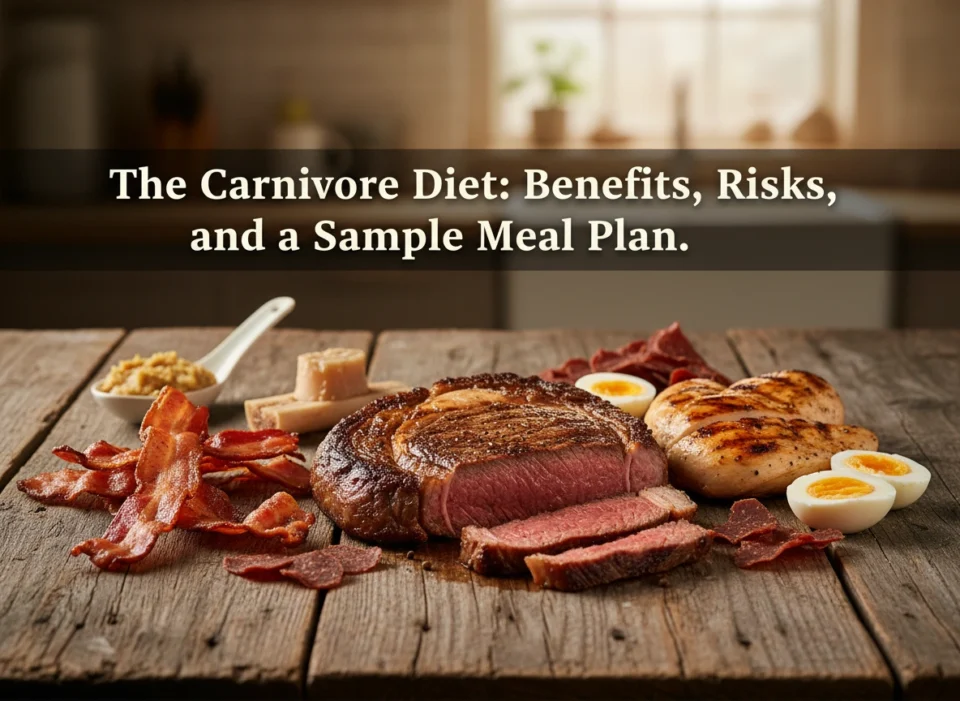
We have all heard about low-carb diets like Keto and Paleo, but a more extreme approach has recently captured the attention of health enthusiasts and critics alike. The Carnivore Diet takes low-carb to the absolute limit. It eliminates all plant foods—no vegetables, no fruits, no grains, no nuts, and no seeds. You eat only animal products.
Proponents claim it can cure autoimmune diseases, melt away fat, and sharpen mental clarity. Critics warn of nutrient deficiencies and long-term heart risks. If you are curious about what happens when you decide to eat only meat, this guide breaks down the science, the controversy, and the practical application of the all-meat lifestyle.
What is the Carnivore Diet?
The Carnivore Diet is a restrictive dietary regimen that includes only animal products. Unlike Keto, which allows for low-carb vegetables like spinach and avocado, the Carnivore Diet is a zero-carb approach. The philosophy is simple: human ancestors thrived on meat, and modern chronic diseases are often linked to the consumption of processed foods, sugars, and plant-based anti-nutrients.
On this diet, you can eat:
- Red meat (beef, lamb, pork)
- Poultry (chicken, turkey)
- Fish and seafood
- Eggs
- Animal fats (butter, tallow, lard)
- Dairy (heavy cream, hard cheese—though some strict adherents avoid dairy)
You must avoid:
- All vegetables
- All fruits
- Grains (bread, pasta, rice)
- Nuts and seeds
- Legumes
- Sugars and artificial sweeteners
The Potential Benefits of Going Carnivore
While scientific studies specifically on the Carnivore Diet are still in their infancy, thousands of anecdotal reports and some preliminary research suggest several compelling benefits.
Simplifies Eating and Weight Loss
One of the most immediate benefits is simplicity. You never have to count calories or track macros. When you eat only protein and fat, it is incredibly difficult to overeat. Protein is highly satiating, meaning you feel full faster and stay full longer. This natural caloric restriction often leads to significant weight loss without the sensation of hunger that accompanies other diets.
Reduction in Inflammation
Many people turn to the Carnivore Diet to manage autoimmune issues. Plant foods contain natural defense chemicals like oxalates, lectins, and phytates. For most people, these are harmless. However, for individuals with sensitive digestive systems or autoimmune conditions, these compounds can trigger inflammation. By removing all potential plant-based irritants, the body gets a chance to “reset,” often leading to reduced joint pain and fewer skin issues like eczema or psoriasis.
Stable Blood Sugar Levels
Because this diet contains effectively zero carbohydrates, blood sugar spikes become a thing of the past. This makes it an attractive option for those with insulin resistance or Type 2 diabetes. Without glucose from carbs, the body enters ketosis, burning fat for fuel instead of sugar. This leads to stable energy levels throughout the day, avoiding the mid-afternoon crash many people experience after a carb-heavy lunch.
Improved Digestive Health
It sounds counterintuitive—doesn’t fiber help digestion? While fiber is beneficial for many, it can exacerbate symptoms for people with conditions like Irritable Bowel Syndrome (IBS) or Small Intestinal Bacterial Overgrowth (SIBO). Removing fiber entirely can reduce bloating, gas, and abdominal pain for these specific individuals.
Understanding the Risks and Controversies
Despite the glowing testimonials, the Carnivore Diet contradicts standard nutritional advice. It is essential to understand the potential downsides before diving in.
Nutrient Deficiencies
The most common criticism is the lack of vitamins and minerals found typically in plants, such as Vitamin C, Vitamin E, and fiber. While meat is incredibly nutrient-dense—rich in B vitamins, iron, and zinc—it doesn’t have everything.
- Vitamin C: Historically, scurvy is the result of Vitamin C deficiency. However, some research suggests that when you don’t consume carbohydrates, your body’s requirement for Vitamin C decreases because glucose and Vitamin C compete for absorption. Still, it remains a valid concern for long-term adherence.
- Fiber: A lack of fiber can change the gut microbiome. While short-term elimination helps some digestive issues, we don’t yet know the long-term effects of a zero-fiber diet on gut bacteria diversity.
Increased Saturated Fat Intake
You will consume a high amount of saturated fat on this diet. For decades, health organizations have linked high saturated fat intake to high LDL cholesterol and heart disease. While modern research is nuanced—suggesting that sugar and inflammation are greater drivers of heart disease than fat alone—individuals with genetic predispositions to high cholesterol (like familial hypercholesterolemia) should be extremely cautious.
The “Keto Flu” and Adaptation
Transitioning to a zero-carb diet is a shock to the system. During the first week or two, you may experience the “Carnivore Flu.” Symptoms include:
- Fatigue
- Headaches
- Nausea
- Irritability
- Diarrhea
This happens as your body switches from burning sugar to burning fat and dumps excess water and electrolytes.
Social Isolation and Sustainability
From a practical standpoint, this is a very hard diet to follow socially. Dining out becomes a challenge when you can’t eat the side dishes, sauces, or bread. The restrictiveness can lead to diet fatigue, making it difficult to maintain as a lifelong lifestyle change.
How to Start: Tips for Success
If you have weighed the pros and cons and want to try the Carnivore Diet, preparation is key.
- Ease into it: If you currently eat a high-carb diet, consider doing a standard Keto diet for a few weeks first. Going from 300g of carbs to zero overnight can cause severe withdrawal symptoms.
- Eat enough fat: A common rookie mistake is eating only lean muscle meat (like chicken breast). This leads to “rabbit starvation,” where you get sick from too much protein and not enough fat. Prioritize fatty cuts like ribeye, ground beef, and pork belly.
- Salt your food: When insulin levels drop, your kidneys flush out sodium. You need to salt your food liberally to prevent headaches and fatigue.
- Listen to your body: Eat when you are hungry and stop when you are full. Don’t force yourself to intermittent fast if you are starving, especially in the beginning.
A 3-Day Sample Carnivore Meal Plan
This meal plan focuses on nutrient density and satiety. It includes a mix of beef, fish, eggs, and organ meats (optional but recommended for nutrients).
Day 1: The Introduction
- Breakfast: Three large eggs cooked in butter with two slices of bacon.
- Lunch: ½ lb hamburger patties (80/20 lean-to-fat ratio). Top with a slice of cheddar cheese if you tolerate dairy.
- Dinner: 10 oz Ribeye steak salted generously.
- Snack (Optional): Beef jerky (check labels to ensure no sugar or soy sauce is added).
Day 2: Focus on Variety
- Breakfast: Omelet made with three eggs and chopped leftover steak or bacon.
- Lunch: Roast chicken thighs with the skin on (skin provides essential fats).
- Dinner: Salmon fillet pan-seared in butter or ghee. Serve with a side of shrimp.
- Snack: Hard-boiled eggs.
Day 3: Nutrient Density
- Breakfast: Steak and eggs (a classic for a reason).
- Lunch: Pork chops cooked in lard or bacon grease.
- Dinner: Ground beef bowl mixed with chopped beef liver (hide the liver taste with spices and salt) or just plain ground beef with a dollop of sour cream.
- Snack: Pork rinds (chicharrones)—ensure the only ingredients are pork skins and salt.
Frequently Asked Questions
Do I need supplements?
Most carnivore dieters do not take multivitamins, arguing that meat provides bioavailable nutrients. However, many use electrolytes (sodium, potassium, magnesium) specifically during the transition phase to prevent muscle cramps and fatigue.
Can I drink coffee?
Purists drink only water. However, many people on the Carnivore Diet still drink black coffee or tea. If your goal is weight loss, black coffee is usually fine. If you are trying to heal severe gut issues or anxiety, caffeine might be worth eliminating.
Is this diet expensive?
It can be, but it doesn’t have to be. While Ribeye steaks are pricey, ground beef, eggs, and pork roast are very affordable. You also save money by not buying snacks, sodas, vegetables, and condiments.
Conclusion
The Carnivore Diet acts as the ultimate elimination diet. For those suffering from stubborn autoimmune conditions, severe digestive distress, or weight loss plateaus, it offers a radical but potentially effective solution. By stripping nutrition back to the basics—animal protein and fat—many people find relief that modern medicine and standard diets failed to provide.
However, it is not without risks. The lack of long-term data and the exclusion of plant-based nutrients mean you should approach it with caution. It is not a religion; it is a tool. Pay close attention to your blood work and how you feel. Before making such a drastic change, consult with a healthcare provider, especially if you have pre-existing kidney or heart conditions.
Whether you try it for 30 days as a reset or adopt it as a lifestyle, the Carnivore Diet challenges everything we thought we knew about nutrition, forcing us to ask: what does the human body truly need to thrive?Check out this site to find useful information.
You may also read: Dragon Fruit: A Superfood Packed with Nutrition and Health Benefits
