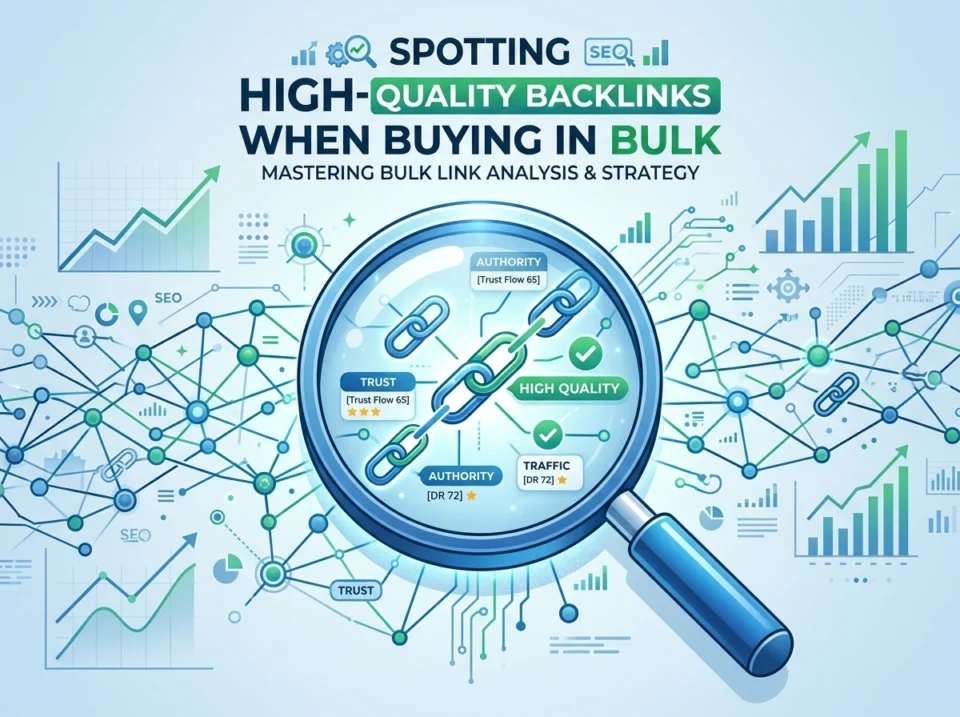
Scaling your website’s search engine optimization requires strategy, patience, and resources. One of the most effective ways to accelerate this process is through link building. When executed correctly, acquiring multiple links at once can significantly boost your domain authority and organic traffic. However, the process comes with inherent risks if you do not know how to evaluate the sources.
Search engines constantly refine their algorithms to reward genuine, authoritative links while penalizing manipulative tactics. This makes the distinction between a valuable link and a toxic one more critical than ever. Purchasing large quantities of links without a strict quality control process can lead to wasted budgets and severe ranking penalties.
To navigate this landscape successfully, you need a clear framework for evaluating link prospects. This guide provides a comprehensive approach to identifying high-quality links when acquiring them at scale. You will learn the core metrics to assess, the warning signs to avoid, and the best practices for maintaining a healthy, natural link profile.
Understanding High-Quality vs. Low-Quality Backlinks
Not all links are created equal. Search engines view links as votes of confidence. A vote from a respected, authoritative source carries immense weight, while a vote from a known spam site can actively harm your reputation.
High-quality backlinks share several distinct characteristics. They originate from real websites with actual human audiences. These sites publish well-researched content, maintain strict editorial standards, and attract consistent organic traffic. A high-quality link is contextual, meaning it sits naturally within relevant content that provides genuine value to the reader.
Low-quality backlinks usually come from sites designed solely for link manipulation. These include private blog networks (PBNs), link farms, and automated directories. These sites often feature spun or plagiarized content, nonexistent editorial standards, and little to no genuine organic traffic. They exist simply to sell placements, leaving prominent footprints that search engine algorithms can easily detect and penalize.
Key Metrics to Evaluate
When you assess a potential link source, you must look beyond surface-level aesthetics. Utilizing established SEO metrics helps you quantify a website’s authority and trustworthiness.
Domain Authority and Domain Rating
Domain Authority (DA) and Domain Rating (DR) are industry-standard metrics developed by SEO software companies to predict how well a website will rank. While search engines do not use these exact metrics, they correlate strongly with organic performance. When evaluating a bulk package, verify that the provider can secure placements on sites with respectable DR scores (typically 30 and above, depending on your niche). Sites with higher ratings generally pass more equity to your domain.
Niche Relevance
A link from a highly authoritative site means little if the site’s topic is entirely unrelated to yours. Search engines use topical relevance to understand context. If you run a financial software company, a link from a respected accounting blog is vastly more valuable than a link from a popular fitness website. Ensure that the domains pointing to your site share a thematic connection with your industry, products, or services.
Organic Traffic
Perhaps the most reliable indicator of a website’s health is its organic traffic. A site might boast a high DR, but if search engines send it zero visitors, you should consider that a massive warning sign. Healthy websites experience steady or growing traffic trends. Use SEO tools to verify that the prospective linking domains actually rank for keywords and attract real human visitors. Links placed on pages that receive traffic are far more likely to positively impact your own rankings.
Identifying Red Flags in Bulk Packages
The link building industry is filled with aggressive marketing and unrealistic guarantees. Learning to spot red flags early can save your website from catastrophic algorithmic penalties.
Be wary of providers offering thousands of links for unusually low prices. Genuine outreach, content creation, and negotiation require significant time and human effort. If a deal seems too good to be true, it almost certainly involves automated spam, hacked websites, or massive link farms.
Another major warning sign is a lack of transparency. Reputable agencies will happily explain their outreach process and answer questions about their quality control. If a provider refuses to share sample placements or keeps their methodologies hidden, walk away. You should always know exactly how your links are being acquired.
Finally, watch out for exact-match anchor text guarantees. Manipulating anchor text by repeatedly using your primary commercial keywords is a fast track to a penalty. Quality providers understand that anchor text must remain natural, utilizing a mix of branded, naked URLs, and long-tail variations.
The Importance of Natural Link Profiles
Search engines analyze your entire backlink profile to determine its authenticity. A natural profile grows organically over time and features a diverse array of link types. When you acquire links at scale, you must mimic this organic growth.
A healthy link profile includes a mix of “dofollow” and “nofollow” links. While “dofollow” links pass authority, a profile consisting of 100% “dofollow” links looks highly suspicious to search engine algorithms. Genuine websites attract mentions on social media, forums, and directories, which naturally generate “nofollow” attributes.
Link velocity is another crucial factor. If your website historically acquires two links a month, suddenly gaining five hundred links in a single weekend will trigger algorithmic filters. A strategic bulk campaign spaces out link placements over weeks or months, ensuring a steady, natural-looking trajectory that aligns with your site’s overall growth.
Best Practices for Buying Bulk Backlinks
Successfully scaling your link acquisition requires a methodical, cautious approach. Start by thoroughly vetting your providers. Look for agencies with verifiable case studies, transparent pricing, and clear money-back guarantees. Ask about their outreach infrastructure and ensure they avoid PBNs entirely.
Start small. Before committing a massive portion of your marketing budget, purchase a smaller package to test the provider’s delivery speed, communication, and placement quality. Review the provided links manually. Check the websites for actual content quality, inspect their outbound link profiles, and verify their organic traffic.
When you are ready to scale, partner with an agency that handles the end-to-end process professionally. For example, when you Buy Bulk Backlinks, ensure the service focuses on contextual placements, high-DR targeting, and niche-specific relevance. Professional execution protects your domain while driving predictable ranking improvements.
Scale Your SEO Safely
Building domain authority through link acquisition remains a foundational pillar of successful SEO. While acquiring links in large volumes can dramatically accelerate your growth, it requires a sharp eye for quality and a commitment to white-hat methodologies.
By prioritizing metrics like organic traffic and niche relevance, avoiding common red flags, and maintaining a natural link profile, you can scale your organic presence safely. Treat link building as an investment in your digital real estate. Take the time to vet your sources, partner with transparent providers, and watch your search engine visibility climb sustainably.
