
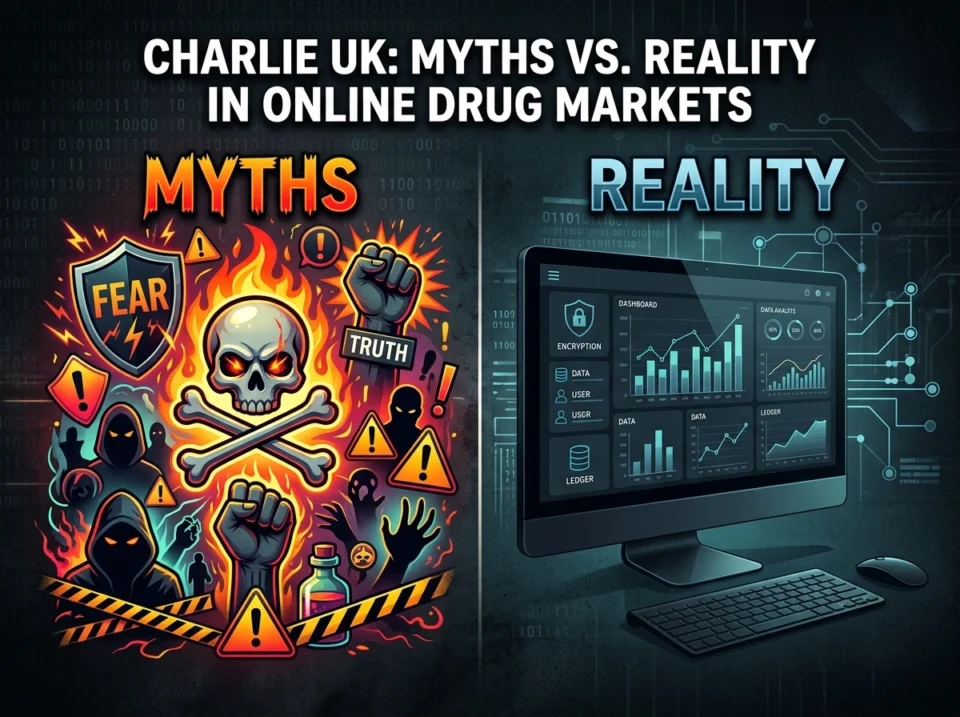
The digital revolution has transformed nearly every aspect of commerce, and underground economies are no exception. Over the past decade, the procurement of illicit substances has steadily migrated from physical street corners to sophisticated, encrypted online platforms. This shift has created a complex ecosystem of closed-access marketplaces, encrypted communications, and cryptocurrency transactions. For many, this digital landscape remains shrouded in mystery, leading to widespread misconceptions about how these markets actually function.
Understanding this hidden economy requires looking past the sensationalized media narratives. While law enforcement agencies continuously monitor and shut down high-profile platforms, new vendors and private networks quickly emerge to fill the void. These digital storefronts operate with surprising levels of organization, prioritizing customer satisfaction, stealth, and product purity to maintain their standing.
To truly grasp how these clandestine operations survive and thrive, we need to examine the mechanisms driving them. By dissecting the common misconceptions and analyzing the actual operational procedures of established vendors, we can gain a clearer picture of this parallel economy. We will explore the realities of quality control, the vital importance of operational security, and the community-driven feedback loops that govern these hidden spaces.
Common Myths Surrounding Online Drug Transactions
The secretive nature of digital underground markets naturally breeds rumors and falsehoods. Many people form their understanding of these platforms based on exaggerated news reports or cinematic portrayals, leading to several pervasive myths.
The first major myth is that online platforms are inherently chaotic and entirely populated by scammers. While fraud certainly exists, the reality is far more structured. Successful marketplaces and private vendors function similarly to legitimate e-commerce sites. They rely heavily on customer retention. A vendor who consistently defrauds buyers will quickly be outed on community forums and lose their entire customer base. Trust is the primary currency in an unregulated environment, forcing serious operators to prioritize honest dealings over quick scams.
Another widespread misconception is the belief that complete anonymity is guaranteed simply by using a darknet browser. In truth, anonymity requires meticulous operational security (OpSec). Casual users who fail to obscure their digital footprints—such as using easily traceable funds or communicating through unencrypted channels—frequently leave digital trails. Vendors and buyers alike must maintain strict protocols to avoid detection.
Finally, many assume that the quality of products sourced online is identical to what is found on the street. This is often untrue. Because digital vendors compete on a global or national scale, they are pressured to offer higher purity to stand out. Street-level dealers operate with a geographical monopoly, often cutting products heavily with adulterants to maximize profit. Online operators, conversely, frequently purchase closer to the source and use scientific processes to remove impurities, knowing that their customer base has access to testing kits and public review forums.
The Reality of Quality Control and Vendor Reputation
When operating outside the bounds of legal regulation, quality control becomes a matter of self-policing. For long-standing vendors, reputation is everything. A single bad batch can destroy years of carefully built credibility. Consequently, established sellers implement rigorous testing and purification processes that rival legitimate pharmaceutical practices.
A prime example of this structured approach is CharlieUK. Established in 2015, this UK-based vendor operates within a closed-access framework rather than relying on massive, public darknet markets. By maintaining a minimalistic storefront and prioritizing reliability over sheer volume, they have cultivated a loyal following. Their approach sharply contrasts with mass distributors who flood the market with heavily adulterated products.
Vendors like this often source their materials directly from origin countries—such as Colombia, Peru, and Bolivia—bypassing the long chain of middlemen who typically dilute the product. Furthermore, advanced vendors utilize chemical processes to ensure purity. For instance, employing ethanol re-crystallization allows operators to wash the product, effectively removing leftover waste and byproducts from the original manufacturing process. This results in a significantly cleaner end product.
This level of dedication to quality is documented in batch updates and detailed product descriptions. By providing transparency regarding the origin and purity of their catalog—which often includes specialized imports like Afghan Heroin, Dutch MDMA, and Ketamine—vendors build a lasting rapport with their clientele. They rely primarily on returning customers and forum-based reputation rather than aggressive, high-risk promotional tactics.
Navigating the Digital Landscape Safely
Operating within these digital environments requires a profound understanding of cybersecurity and secure logistics. Both buyers and sellers must navigate a landscape fraught with risks, employing a variety of tools to protect their identities and their financial transactions.
Cryptocurrency is the lifeblood of this economy. While Bitcoin was once the standard, its public ledger makes it vulnerable to chain analysis. Consequently, privacy-focused coins like Monero (XMR) have become the preferred medium of exchange. Monero obfuscates the sender, receiver, and transaction amount, providing the financial privacy necessary for these operations. Vendors routinely provide specific XMR or Bitcoin addresses for payment, ensuring funds cannot be easily traced back to traditional banking institutions.
Communication is another critical vulnerability. Traditional email and messaging apps are entirely inadequate. Instead, operators utilize secure, encrypted email services like ProtonMail, alongside PGP (Pretty Good Privacy) encryption. PGP allows users to encrypt messages so that only the intended recipient, holding the correct private key, can decipher them. This ensures that even if an inbox is compromised, the actual contents of the messages—such as shipping addresses and order details—remain unreadable.
Physical logistics are just as vital as digital security. The term “stealth” refers to the packaging methods used to bypass postal inspections. Professional vendors employ vacuum sealing, Mylar bags, and decoy packaging to eliminate odors and avoid x-ray detection. By designing packages to look like everyday commercial mail, they blend seamlessly into the millions of parcels processed daily by services like the Royal Mail. High-quality stealth ensures that neither the postal worker nor any automated sorting machines have reason to suspect the contents, facilitating safe, next-day domestic deliveries without requiring a signature.
The Role of Community Feedback and Reviews
In the absence of consumer protection agencies or better business bureaus, the community steps in to regulate the market. Decentralized forums and encrypted chat groups serve as the ultimate arbiters of truth, providing a space for buyers to share their experiences, post laboratory test results, and warn others about compromised operators.
This feedback loop is incredibly powerful. When a buyer receives a product, they frequently test it using reagent kits or send samples to anonymous drug-checking services. They then publish detailed reviews assessing the stealth of the packaging, the communication speed of the vendor, and the overall quality of the substance.
Vendors closely monitor these spaces. Positive reviews act as organic marketing, driving new business to their closed-access storefronts. Conversely, negative feedback can be disastrous. If an operator begins selectively scamming buyers or allowing their product quality to slip, the community will quickly flag them. This system creates a strong financial incentive for vendors to maintain high standards. It is this very mechanism that allows operators who prioritize consistent communication and reliable delivery to survive for nearly a decade in a highly volatile environment.
By prioritizing long-term relationships and community standing over short-term financial gain, vendors establish themselves as trusted entities. They understand that a low-profile presence, backed by undeniable community proof, is far more sustainable than drawing unnecessary attention through aggressive expansion.
Bridging the Gap Between Myth and Reality
The digital underground economy is a fascinating study in self-regulation and technological adaptation. While it is easy to view this space through the lens of media sensationalism, a closer inspection reveals a highly organized network driven by reputation, quality control, and advanced cybersecurity.
The transition from physical drug deals to encrypted online transactions has fundamentally altered the landscape of illicit commerce. It has forced vendors to elevate their standards, utilizing direct sourcing and chemical purification methods to satisfy an increasingly educated consumer base. Operations are no longer reliant on brute force or geographical dominance; instead, they depend on PGP encryption, privacy coins, and impeccable customer service.
By understanding the mechanics of these platforms, we can separate the myths from the actual operational realities. This hidden economy operates on the principles of trust, community oversight, and rigorous operational security. As technology continues to evolve, these closed-access markets will undoubtedly adapt, maintaining their silent presence in the digital shadows.
